Children of the Dark
Not a service. Not a storefront. Not a gang for hire.
Children of the Dark moves through invitation, recognition, and appetite. Sometimes it begins with a business card left on a coffee shop board. Sometimes it begins in a dark web room where someone says the wrong thing, at the wrong time, to the right eyes.
What This Is
Children of the Dark is not built around contracts, billing, or clean transactional harm. It does not operate like a corporate black market, and it does not reduce itself to a menu. It watches people. It studies fractures. It notices what they hide, what they crave, what they keep pretending is under control.
Claire stands at the center of it. Under her, the network does not simply target. It selects. It leans into weakness, obsession, curiosity, vanity, loneliness, shame, and hunger. It does not need to work for everyone. It only needs the ones already drifting toward it.
How They Are Found

A plain card. A number. A phrase. A symbol that means nothing to most people. To the right person, it feels like being noticed before they said a word.
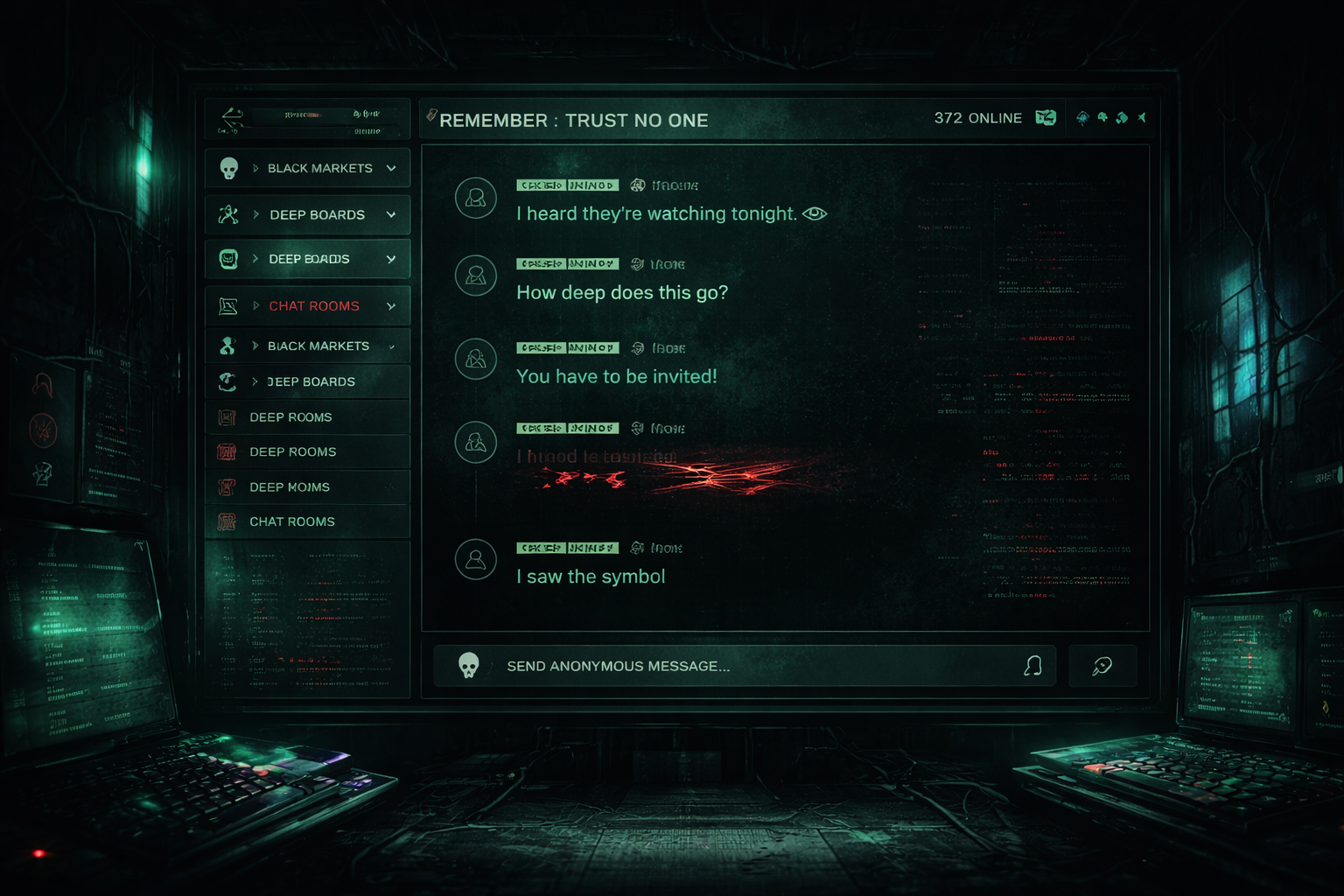
The chat rooms are never as open as they look. Some are bait. Some are mirrors. Some are doors. The people who find Children of the Dark there are usually already asking to be seen.
What They Are Not
Children of the Dark is not KIP.
KIP turns pain into industry. It will do anything to anyone for any amount, because harm is the point and transaction is the method. The Creepy Thin Man sits at the center of that machine.
CoTD is different. It is more personal, more selective, more intimate in its reach. It does not exist to be hired by whoever pays enough. It exists to pull certain people toward the dark they were already carrying.
What They Do
They identify the people who want to be understood badly enough to mistake attention for safety.
They do not always need overt force. A suggestion, an invitation, a private channel, a name spoken at the right time can be enough.
Their interest is not only in what a person has done, but in what they can be turned into once they stop pretending.
Claire

Claire does not run Children of the Dark like a businesswoman with a ledger. She runs it like a person who understands what people confess when they think they are anonymous.
She is not interested in scale for its own sake. She is interested in control, proximity, dependency, and the slow surrender that happens when someone realizes they have been watched longer than they thought.
Under Claire, CoTD is not loud. It is patient.
The Card on the Board
A coffee shop board is full of ordinary need.
Rooms for rent. Lessons. Handyman work. Lost pets.
Then there is one card that feels like it was left there for only one person.
Public Surface
- A symbol with no obvious meaning
- A number that changes
- A phrase that sounds harmless until it doesn’t
- An account that vanishes after contact
- A room that asks more questions than it answers
- You were noticed
- You were studied
- You were not random
- You are already closer than you think
- The invitation was never public