INTRO
The first to arrive is not necessarily there to save. It is the one who showed up first.
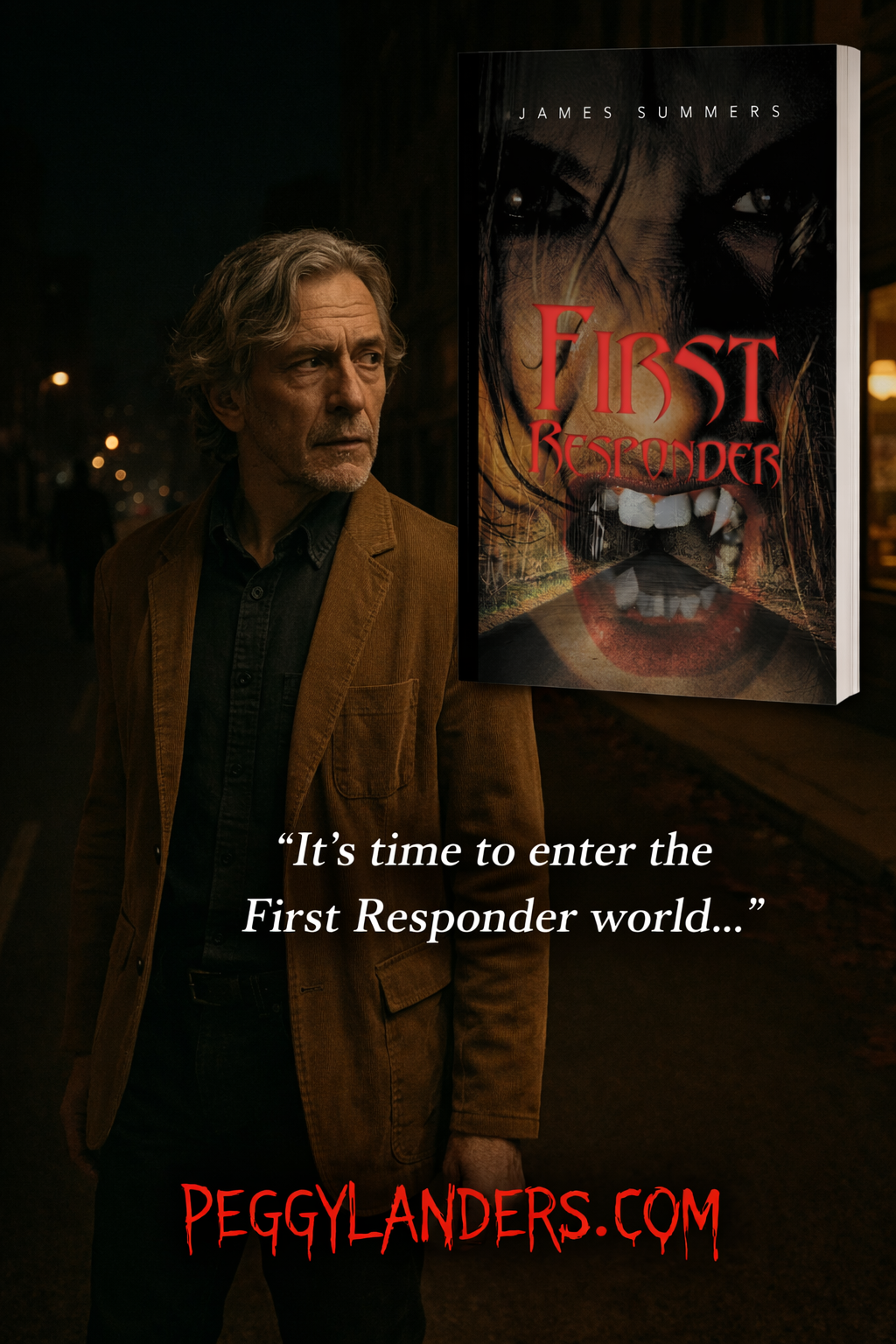
FIRST RESPONDER
A Novel by James H. Summers
The world of First Responder is not hidden beneath ordinary life. It exists beside it. What follows is not a distant nightmare, an isolated town, or a sealed-off event. It is a collision between everyday systems and the things quietly moving through them.
Emergency calls. Late-night shifts. Apartment complexes. Back roads. Hospitals. Conversations held too long after midnight. Small moments where people assume they are safe because routine tells them they should be.
A NOTE ON THE WORLD
There are no ancient kingdoms here. No hidden cities. No elegant society operates behind velvet curtains. There is only access.
People enter each other’s lives casually. Through work. Through attraction. Through trust. Through exhaustion. Most doors in this world are not kicked open. They are held open politely.
TECHNOLOGY REMEMBERS
Technology does not create the horror within these pages. It preserves it. Records it. Carries it farther than it should.
Messages linger. Images spread. Conversations survive. The modern world does not bury darkness particularly well. It archives it.
NO SAFE DISTANCE
The supernatural elements of First Responder do not replace human cruelty. They exist alongside it.
Predators were already present long before anything unnatural arrived. Some simply learned to move through the world more efficiently than others.
ABOUT THE TRILOGY
First Responder begins at the moment violence is witnessed and recorded. It is a story about exposure—what happens when the private becomes public, when trauma is captured, shared, replayed, and transformed into data.
Second Chances continues directly from the events of the first novel and treats survival as a liability rather than a victory. Witnesses are no longer abstract. They are identified, pursued, manipulated, protected, or erased.
Hemoglobin Insecure completes the arc by destabilizing the assumption that any hierarchy remains permanent. Power fragments. Loyalty mutates. New forces emerge not to resolve the world, but to expose how little of it was ever understood.

WHERE THE STORY GOES NEXT
The events of First Responder do not end when the final page is turned. They continue outward.
What begins in the first novel as an isolated rupture gradually reveals itself to be part of a much larger structure—one built on access, observation, dependency, and proximity. The systems surrounding the characters do not collapse after exposure. They adapt.
Across the trilogy, technology shifts from convenience to archive, from archive to weapon, and eventually into something far more dangerous: permanent memory.
What survives after exposure becomes impossible to contain?
AUTHOR’S NOTE
When First Responder was first released, the world already felt increasingly connected, recorded, and exposed. Ten years later, many of the fears explored within these novels feel less speculative and far more familiar.
I was never interested in explaining violence away, redeeming it through intention, or reshaping it into something safe. The goal was not to create a world where monsters are exceptional. It was to create one where harm becomes procedural—where cruelty survives because it is efficient, repeatable, profitable, or ignored.
These stories do not offer absolution. They offer proximity.
AFTER THE NIGHT
The night did not end. It reorganized itself.
What followed was not relief, closure, or the comfort of distance. Systems adapted. Names changed. Silence learned how to move unnoticed. The damage never disappeared—it settled into the structure of things, embedding itself where it could no longer be easily removed.
I no longer measure survival by whether I am still breathing. That belonged to an earlier, simpler understanding of the world. Survival now means enduring under observation—remaining functional while being watched, tracked, and anticipated.
There are still people who believe the danger has passed simply because the noise has faded. They mistake quiet for safety. Quiet is only the absence of immediate resistance.
What comes next will not be louder. It will be more precise.
A NOTE FROM AMALIE DE MONTCLAIR
Stories such as these are often mistaken for invention. Mortals prefer that. It allows distance. It permits them to believe violence belongs to isolated places, isolated people, isolated moments safely removed from their own lives.
What follows within these pages is not simply horror, but proximity. The gradual collapse of the comforting belief that ordinary systems are inherently safe, stable, or moral.
Some of the individuals you encounter here believe they are witnessing the beginning of something.
They are mistaken.
By the time most people recognize a structure, it has already existed for quite some time.
— Amalie de Montclair

James H. Summers
Psychological horror built on control, identity, consequence, and the quiet pressure beneath ordinary life.
Five published books. Multiple ongoing projects. Two completed prestige series bibles. A growing world of vampires, systems, collapse, and people who arrive first.
ENTER THE WORLD
No one emerges untouched. No one remains outside of it. This was never a story about endings. It was always about what happens once escape is no longer possible.
peggylanders.com
|
X:
@DarkFictionAuth
|
Instagram:
@darkfictionauth
|
YouTube:
@darkfictionauth3783